

The Deaf Will Hear and the Blind, See
Gene editing is creating small (but expensive) health miracles.


Welcome to What Could Go Right?, where at least we still have the annual European seagull screeching championship.

There are more than 100 people in the United States, blind as of a few years ago, who can now see. I don’t mean that in a cutesy “they got a stronger glasses prescription” kind of way. These people were born with a rare condition, Leber congenital amaurosis (LCA), that causes total blindness by early adulthood.
In 2017, a medicine called Luxturna, which restores the vision of LCA patients, became the first gene therapy approved by the FDA for an inherited condition. It works by replacing a defective gene that normally produces a protein that the retina needs to respond to light. Just shy of a decade later, as the husband-and-wife scientist team behind Luxturna accepted a life sciences breakthrough prize at the “Oscars of Science” last month, nearly all eligible LCA patients in the US have received the treatment. Luxturna isn’t a cure, but as the prize page reports, these children can now “attend regular schools, play outside at night, and in some cases even qualify for driver’s licenses.” The treatment is one-and-done, and, so far, it lasts.
Luxturna isn’t the only gene therapy in the news lately. In April, the FDA also approved the first gene therapy for genetic deafness: Otarmeni, which, like Luxturna, targets a faulty gene. Both treatments affect small numbers of people—Otarmeni treats a form of hearing loss that afflicts about 50 newborns annually in the US—but they are small miracles in that they are an option at all, as gene therapy research had slogged uphill for decades.
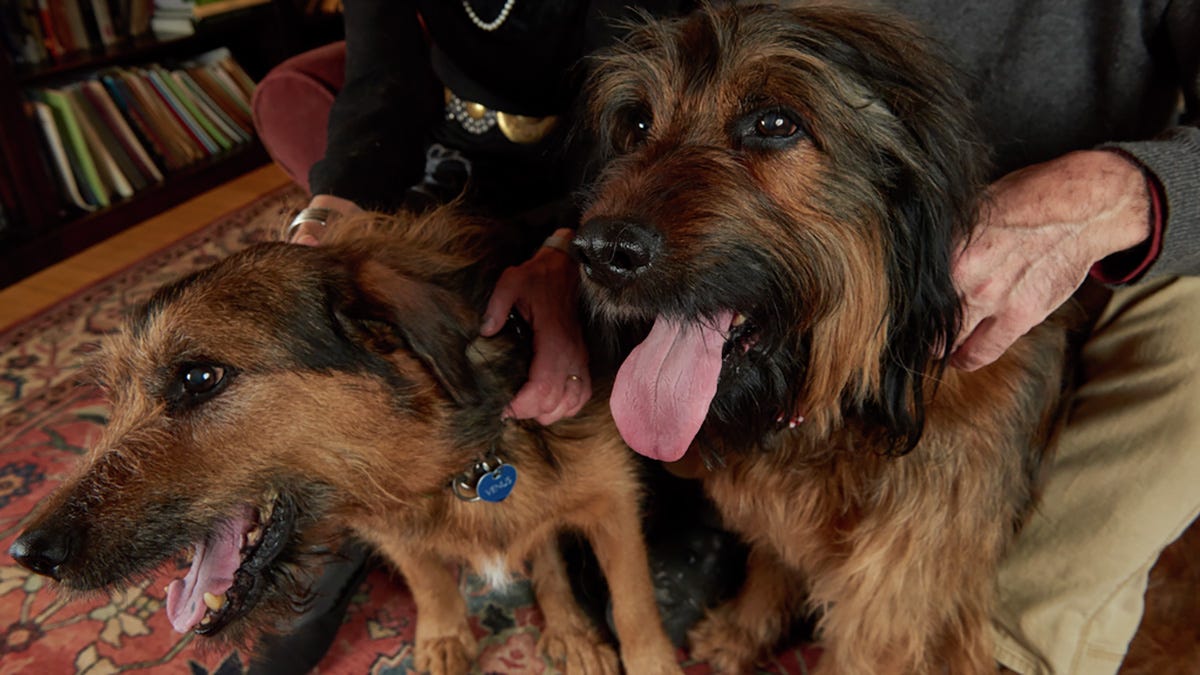
For instance, when breakthrough prize winners Jean Bennett and Albert Maguire, respectively a molecular biologist and an ophthalmic surgeon, began trying to reverse inherited blindness in the 1980s, it was a monumental challenge—“like thinking you wanted to go to the moon in 1950,” said Maguire. After years of testing on mice and dogs—which the couple later adopted!—they were finally ready to undertake human trials at the beginning of the millennium.1 But that was a precarious time in the field; after teenager Jesse Gelsinger became the first person to die while enrolled in gene therapy research in 1999, all ongoing trials were subject to investigation and funding dried up.
A quarter-century later, research gears are whirring again. Bennett and Maguire’s work paved the way for more than 100 retinal gene therapy trials alone; hundreds in other areas start up every year. In addition to Luxturna and Otarmeni, the FDA has approved three other gene therapies—including Casgevy, the first (and only) to use the editing tool CRISPR, a treatment primarily for the blood disease sickle cell.2 It affects millions worldwide, but Casgevy has been introduced in only a handful of the world’s richest countries.3
Helping the deaf to hear and the blind, see are feats of biblical-level proportions, and more are on their way. But they come with one enormous caveat: the price tag. Luxturna costs over $800,000 for treating both eyes, and that’s the cheapest of the FDA-approved five, barring Otarmeni. Because of the small patient pool, Otarmeni’s makers opted to do something unusual: give it away for free, although they don’t have control over what doctors charge to administer it.
So while these scientists more than deserve the awards they’ve been given, making these treatments accessible is the next badly needed breakthrough.
—Emma Varvaloucas
What Could Go Right? S8 E4: Why $6 Gas Isn’t the End of the World | with Jason Bordoff

What happens when the global energy supply faces its greatest disruption since the 1970s? Jason Bordoff, a leading energy expert and former advisor in the Obama White House, joins host Zachary Karabell to navigate a world where the Strait of Hormuz is closed and gasoline prices are soaring. | Listen now
By the Numbers
>2M: EVs in the United Kingdom
42%: Drop in teen pregnancy rates worldwide since 2000
~7 in 10: Americans who trust vaccine scientists, similar to trust in scientists generally
21: New adult cheetahs spotted in Iran, plus six cubs, this year
475: Days that AI can spot pancreatic cancer before it appears on scans
Go Figure
In 2015, less than 20% of Jakarta’s residents lived within walking distance of mass transit. Now, nearly 90% of the city that once topped the Stop-Start Index has access to buses or trains. Credit political will at home and investment from abroad.
Quick Hits
⚖️ Virginia has passed a paid family leave law, bringing the count to 15 states. It’s the first in the South, raising hopes of a nationwide shift.
🧬 It looks like CAR T-cell therapy works for autoimmune conditions, too: Clinical trials for the approach originally developed for cancer are underway around the world; the first treatments could be approved as early as next year.
🎭 AI actors and writing won’t be eligible for an Oscar, says the academy, presumably introducing an incentive for filmmakers not to use it.
📉 Burkina Faso is reporting an unprecedented decline in malaria rates, with deaths dropping by 44%, largely due to new vaccines. Meanwhile, the first malaria drug for babies, a major public health milestone, has been approved by the WHO.
⚕️ Ozempic generics have arrived in Canada, the second country after India to introduce them. Meanwhile, the first controlled study of the drug’s effect on heavy drinkers found that it helped reduce their alcohol consumption.
🏭 France has announced a comprehensive roadmap to phasing out all fossil fuels by 2050, fresh off the first international talks on the topic that brought together nearly 60 countries.
🔋 Australia’s grids are changing as battery capacity booms, reducing the need for gas and lowering electricity prices across most regions.
🛰️ Could we generate solar power directly from space? Meta thinks so. It just inked a deal with a satellite startup that plans to transmit near-infrared light to on-Earth solar farms, sidestepping riskier ideas such as high-powered lasers and microwave beams.
🚫 The US Senate unanimously passed a resolution to ban members and staffers from trading on prediction markets after a flurry of bets before the start of the Iran War and wagers on pols’ own races. Stock markets next, anyone?
🔬 Two pilot studies are showing promise in advancing women’s health: a noninvasive scan to detect endometriosis years earlier and a treatment for pre-eclampsia that slows its progression—and that is not an emergency C-section.
🚭 Two encouraging pieces of legislation from the United Kingdom: a generational ban on smoking and the pardoning of women previously convicted of an illegal abortion.
🩸 First responders in the Mountain West are now carrying whole blood, which can help stop bleeding and jumpstart recovery. It’s not a new idea, but its comeback has a bittersweet provenance: Veterans suggested it after serving in Iraq and Afghanistan.
🙅 Maryland is the first state to ban grocery stores and third-party delivery services from using dynamic pricing, a practice that uses customers’ personal data to set prices. And Minnesota is the first to ban “nudification” apps, which use AI to “undress” people in images.
👀 What we’re watching: The Trump administration is trying to help low-income Americans fund their retirement.
💡 Editor’s pick: To compete with Chinese EV manufacturers, Ford had to blow up something it once pioneered: the assembly line.
TPN Member Originals
(Who are our Members? Get to know them.)
‘Be not simply good. Be good for something.’ | Breaking the News | James Fallows
Trump is finally fading | Yascha Mounk | Yascha Mounk
The everything, everywhere, all at once corruption story | Tangle | Isaac Saul
The unruly states of America | Diane Francis | Diane Francis
The world hedges its bets on America | GZERO | Ian Bremmer
The great Black GOP exit from Congress | WaPo ($) | Theodore R. Johnson
Durable hope | The Preamble | Sharon McMahon
The one tax the rich can’t escape | The Atlantic ($) | Richard Florida
Not so dire straits | The Edgy Optimist | Zachary Karabell
What Gen Z’s nostalgia is really telling us | Flourishing Friday | Clay Routledge
USAID spending at the country and sector level: What happened in FY 2025? | CGD | Charles Kenny
Bennett and Maguire share the prize with Katherine A. High, then at the Children’s Hospital of Philadelphia, who was critical to moving the drug into clinical trials.
Stuart H. Orkin and Swee Lay Thein also won a breakthrough life sciences prize for their research that underpinned the development of Casgevy. The invention of CRISPR, by the by, is a big reason why the gene therapy field revived.
Casgevy, which costs over $2 million, is covered by Medicaid in about 30 US states. More than half of American sickle cell disease patients are on Medicaid.
RE "What we’re watching: The Trump administration is trying to help low-income Americans fund their retirement" I don't trust ANYTHING with Trump's name on it. It's going to be another grift - money in his pocket and/or to anyone associated with the program.
If they can afford it