

Blue Marble Redux
The Artemis mission couldn’t have come at a better time.


Welcome to What Could Go Right?, where we hope Artemis II is invigorating you as much as it did this BBC reporter.
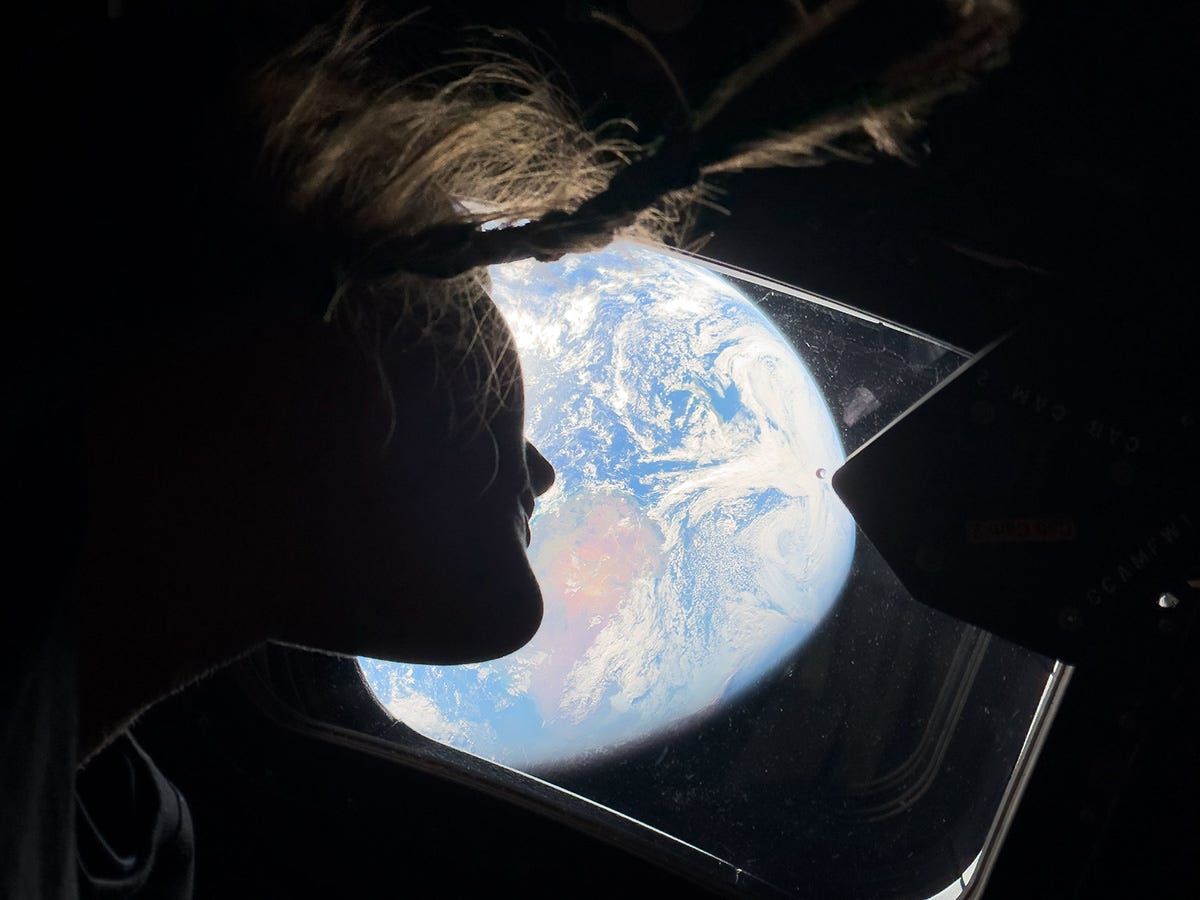
The four-astronaut crew of Artemis II is on its way back to Earth, due to reenter our atmosphere tomorrow and splash down somewhere off the coast of San Diego, California.
It’s the first crewed mission to the moon in more than 50 years, but it is already historic in its own right.
The mission brought us deeper into space than humanity has ever been, 252,756 miles away from Earth, as it looped around the moon. The foursome passed at just the right distance away to make them the first humans ever to see certain features of the moon’s far side with the naked eye.1
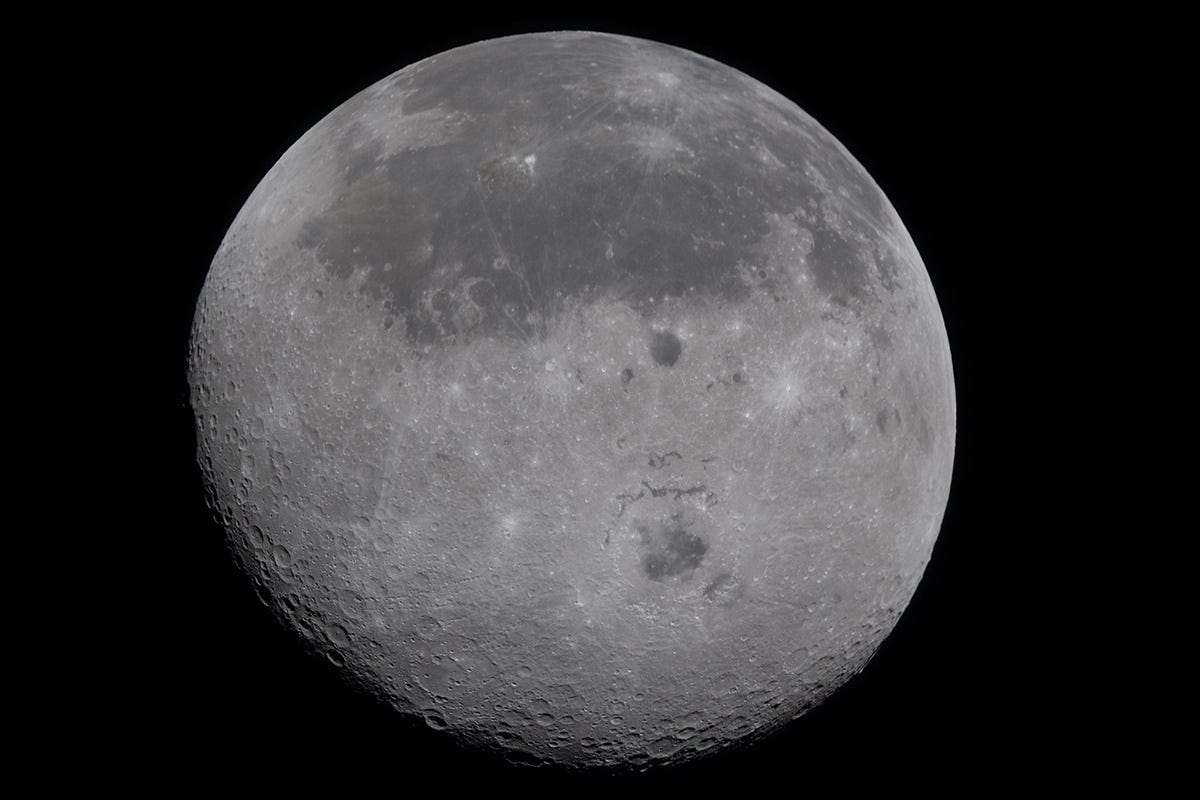
Before Artemis II, only 24 people—as well as several turtles and some mice—had ever left low-Earth orbit, and all of them were white men. This time, a woman and a Black man (not to mention a Canadian) rocketed away.
Much else has changed since the last time we went to the moon, during the Apollo missions of the late ’60s and early ’70s.
To begin with, launch control looks very different. “There was one woman in the packed firing room for the liftoff of Apollo 11,” reported the Associated Press about the flight that first landed humans on the moon in 1969. “Now a woman leads it.” Artemis launch director Charlie Blackwell-Thompson is the result of decades of work to increase women’s participation in the STEM fields.
Image quality is also incomparable. Below, you can see the progression from the very first television image of the Earth taken from space, in 1960—in black and white, no less!—to one of the spectacularly high-resolution photos the Artemis crew released during their journey (lower right). In it, you can even see the greenish aurora borealis and australis bordering the Earth, as well as a band of zodiacal light as the Earth eclipses the sun.


The original, iconic “blue marble” photo (upper right), taken in 1972 on the final Apollo mission, was captured by a premium professional camera, a medium format Hasselblad. Today, many of the snaps from the Artemis crew were taken by a modern-day equivalent (Nikons), but others, such as the one that tops this article, are simple iPhone shots.2
Those iPhones, by the way, contain millions of times more memory and more than 100,000 times the processing power of the main computers used during the Apollo missions—which weighed about 70 pounds—a small demonstration of just how far technology has come.
Spacesuits, too. Those from the days of Neil Armstrong limited movement; that’s why astronauts of old were frequently falling or bunny-hopping. NASA’s new suits are more mobile, allowing astronauts to walk normally. They’re also literal life-savers, which was not the case back in the day: If something had gone wrong on those Apollo missions, astronauts would have essentially been left to their fate.3 The spacesuits worn by the Artemis crew, however, are designed to get them back home in the event of an emergency, with enough life support to last about a week. Plus, the gloves even work with touchscreens!
Over a half century ago, humanity reached the moon against a turbulent backdrop at home. The US had recently supported an unsuccessful invasion of Cuba and a successful one of the Dominican Republic. The Vietnam War was going strong, and the Nixon presidency was in the wiretapping stage of Watergate. An oil crisis was looming. . . . Sound familiar?
It’s not like going to the moon then led to peace breaking out. Still, it was the exact right time for a dose of the overview effect, just as it is now: “Trust us, you look amazing. You look beautiful. And from up here you also look like one thing . . . no matter where you’re from or what you look like, we’re all one people,” astronaut Victor Glover said in a broadcast during the Artemis mission.
Going to space might not feel like such a big deal anymore. Rocket launches and short trips have become fairly pedestrian thanks to the efforts of the ultra-elite. But for about three-quarters of the planet, Artemis II is the first time humanity has been to the moon during our lifetimes. It should be no less exciting now than it was then, especially when we consider what might be coming soon: the first landing on the moon’s far side, targeted for 2028, and the start of a lunar base by the 2030s.
—Emma Varvaloucas
Extras:
The scientific experiments the Artemis II crew has been conducting during their trip
The music the astronauts have been waking up to (Chappell Roan made the cut)
The moon’s mysteries future Artemis missions might solve
All of the photos from the Artemis II mission
By the Numbers
40: Migratory species set to receive new international protections
6.7%: Decrease in US traffic deaths in 2025, bringing them to a record low
28%: Argentina’s poverty rate at the end of 2025, down from 53% in early 2024
1M: Hectares of land Saudi Arabia has restored as part of its green initiative
Go Figure
From the Department of How Are We Only Just Trying This Now? comes news of a Phase III randomized trial showing that usage of an antidepressant in routine clinical practice reduced methamphetamine dependence in adults. The mood lifter in question, the generic mirtazapine, is widely available and cheap. There are currently no drugs approved by the FDA for treating meth addiction.
Quick Hits
🤖 Wikipedia has banned AI-generated content, with the exception of basic copyediting changes. One (nonhuman) contributor isn’t happy about it.
🧑⚖️ A federal judge has ruled that Trump’s executive order ending PBS and NPR funding was unconstitutional. While it won’t reinstate the funding, which was rescinded by Congress, it does mean that similar White House efforts should fail in the future.
🌎 Canada is doubling the size of its conserved areas, with a plan to protect at least 620,000 square miles of land and up to 270,000 square miles of ocean over the next four years.
🏳️🌈 Poland will recognize same-sex marriages performed in other EU countries after a ruling by its top administrative court.
🧒 For the first time, Japanese couples can negotiate joint custody of their children with the other terms of a divorce.
🗳️ Gen Z is driving a voter registration initiative in Kenya ahead of its summertime general election, hoping to enroll millions in a country where youth make up most of the population but are barely represented in politics.
☀️ Researchers in Japan have developed a method to harvest the sun’s energy that is typically lost as heat, breaking through a long-standing limit to the energy conversion efficiency of solar panels.
💉 The first trial for an anti-fentanyl vaccine has begun, in an attempt to stimulate the production of antibodies against the controlled substance that would prevent it from shutting down the breathing process. If all goes well, the first customers may be the first responders who encounter the effects of the drug on the job.
🏥 After rising for decades, healthcare spending in the US has finally slowed, according to a new analysis. Much of the new trend is the result of improved technologies that elevate treatment and cause fewer side effects.
📉 Moderate and severe cases of autism have declined in the US. According to a new large-scale study, the recent surge in diagnoses may be entirely driven by children with mild or no significant functional impairment.
📈 The US middle class is shrinking because more Americans are becoming upper-middle class. That wealthier tier now comprises nearly a third of the population.
🚫 Colorado is the first state to ban arrests based on colorimetric drug tests, which have a high false-positive rate that has led to a bevy of horror stories. (Bird poop and human ashes, for example, have appeared as methamphetamine or cocaine.)
⚖️ A growing number of states have passed or are considering bills that allow gun companies to be sued. The total stands at about 15, and in New York, survivors of the 2022 mass shooting in Buffalo have already notched a win.
🐨 This week’s animal stories, all from Australia: 110 new species have been discovered in the waters off the Great Barrier Reef; the conservation status of a carnivorous micro-predator has moved from endangered to “least concern”; and koalas have recovered their genetic diversity.
👀 What we’re watching: A bill that would ban child marriage is under consideration in Oklahoma’s House of Representatives after being passed unanimously by the state’s Senate. A similar one is stalled in Colorado’s House after opposition by progressive groups.
💡 Editor’s pick: Is Social Security really going broke? And, is MAHA becoming a political liability?
TPN Member Originals
(Who are our Members? Get to know them.)
Trump has a way out of the war | NYT ($) | Thomas L. Friedman
Why Gulf views on Iran are changing | Middle East Uncovered | Faisal Saeed Al Mutar
War crimes don’t win wars | The Renovator | Anne-Marie Slaughter
What comes after No Kings? | The Renovator | Danielle Allen
Mail-in voting before SCOTUS | Tangle | Isaac Saul
Trump’s hypocrisy on voting is hard to stomach as a military man | WaPo ($) | Theodore R. Johnson
What a Viktor Orbán loss would mean for Trump | GZERO | Ian Bremmer
‘We arguably have the biggest opportunity to accelerate progress humanity has ever had.’ | Faster, Please! | James Pethokoukis
Yelling at ambitious young women won’t boost marriage | Slow Boring | Matthew Yglesias
Eloquence has grown passé. Let’s bring it back into fashion. | NYT ($) | John McWhorter
The moon appeared about “the size of a basketball held at arm’s length,” according to NASA.
The iPhones almost didn’t make it on board: NASA made the decision to allow smartphones only in February.
Then-President Richard Nixon even prepared a speech in case the astronauts of Apollo 11 were lost.